
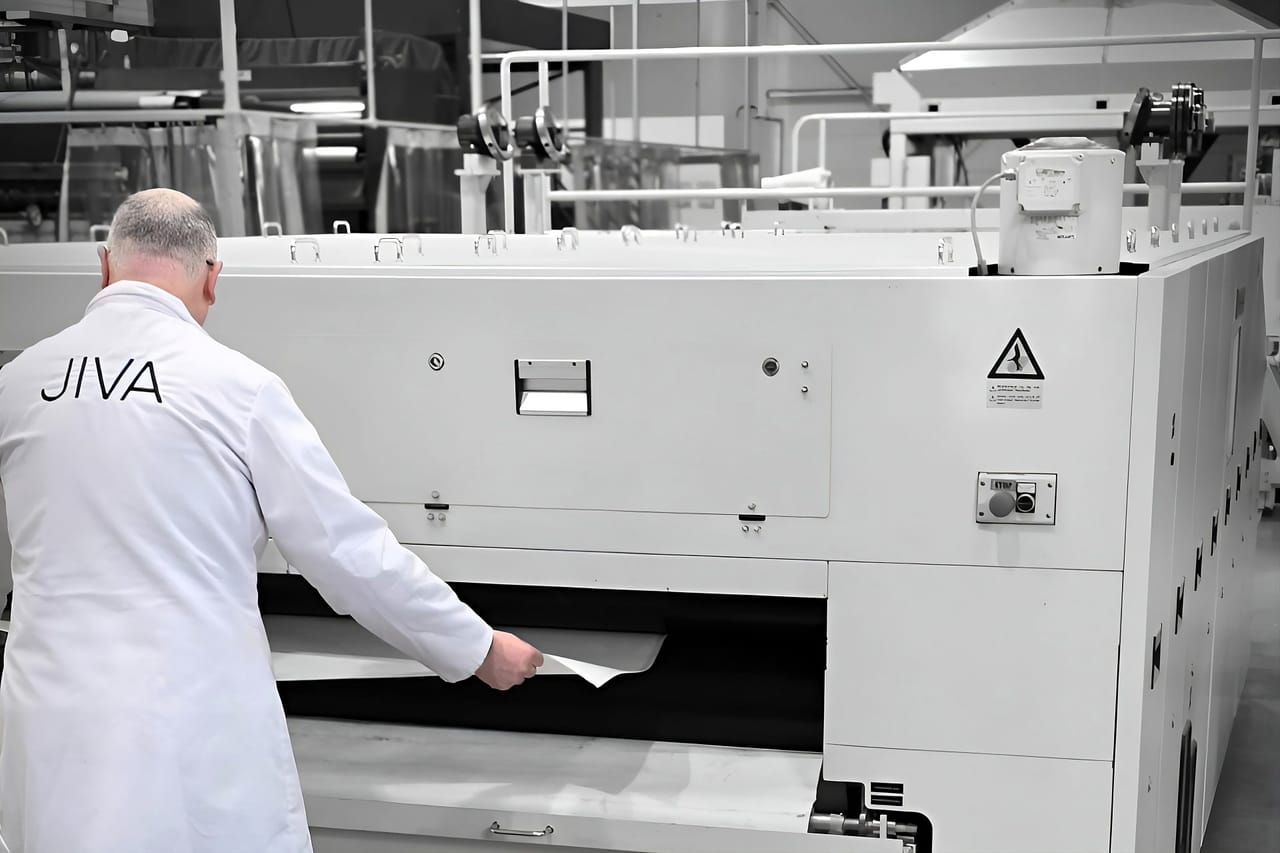
PCB laminate without glass fibre
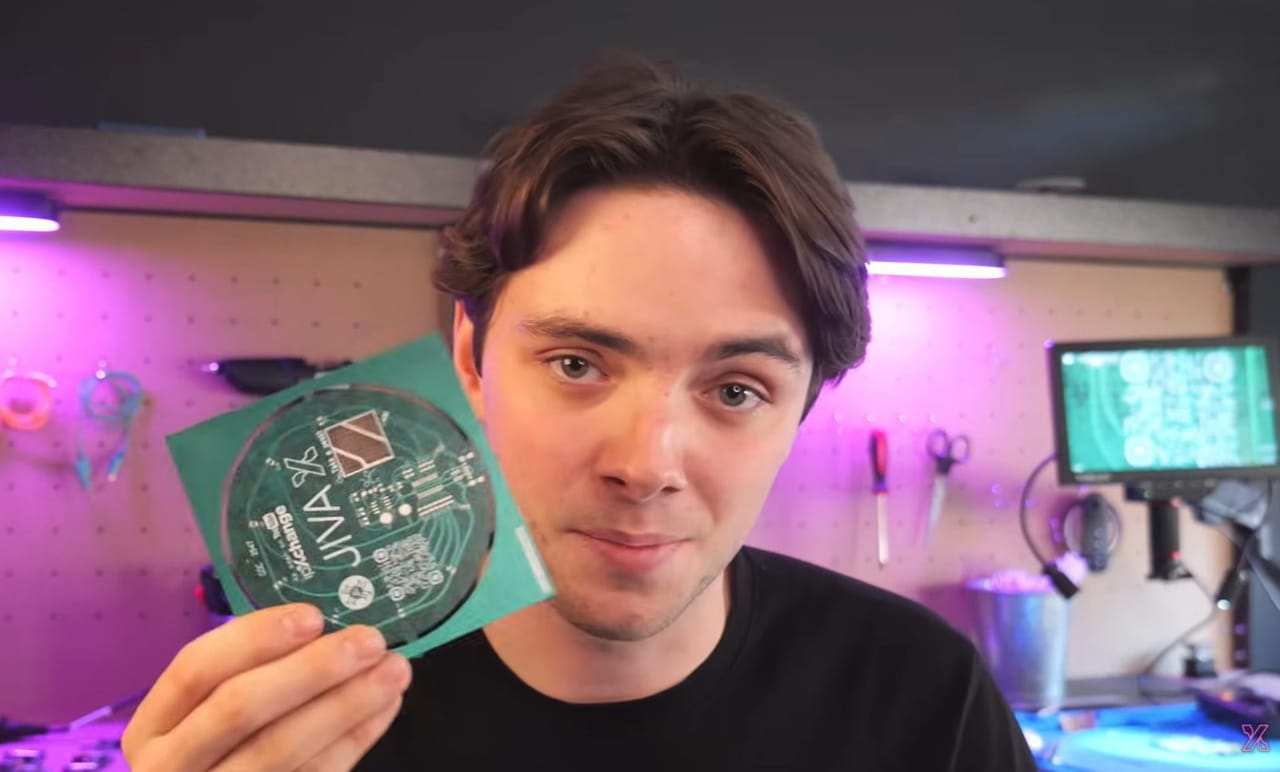
Soluboard® replaces the glass fibre and epoxy in FR-4 with natural fibre and a thermoplastic binder, and runs on existing PCB lines.
The problem with FR-4
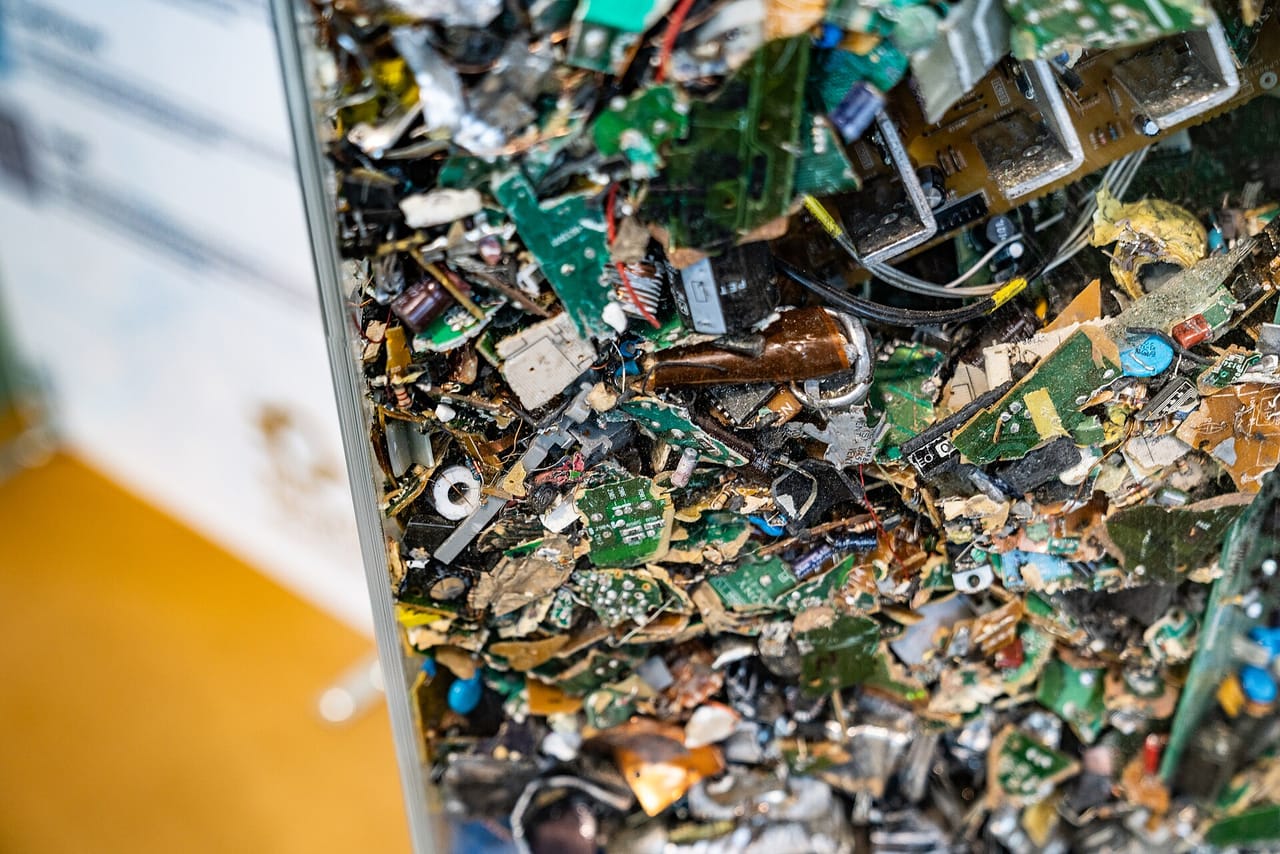
Most circuit boards start as glass fibre locked in epoxy: carbon-heavy to make, exposed to a strained supply chain and almost impossible to take apart.
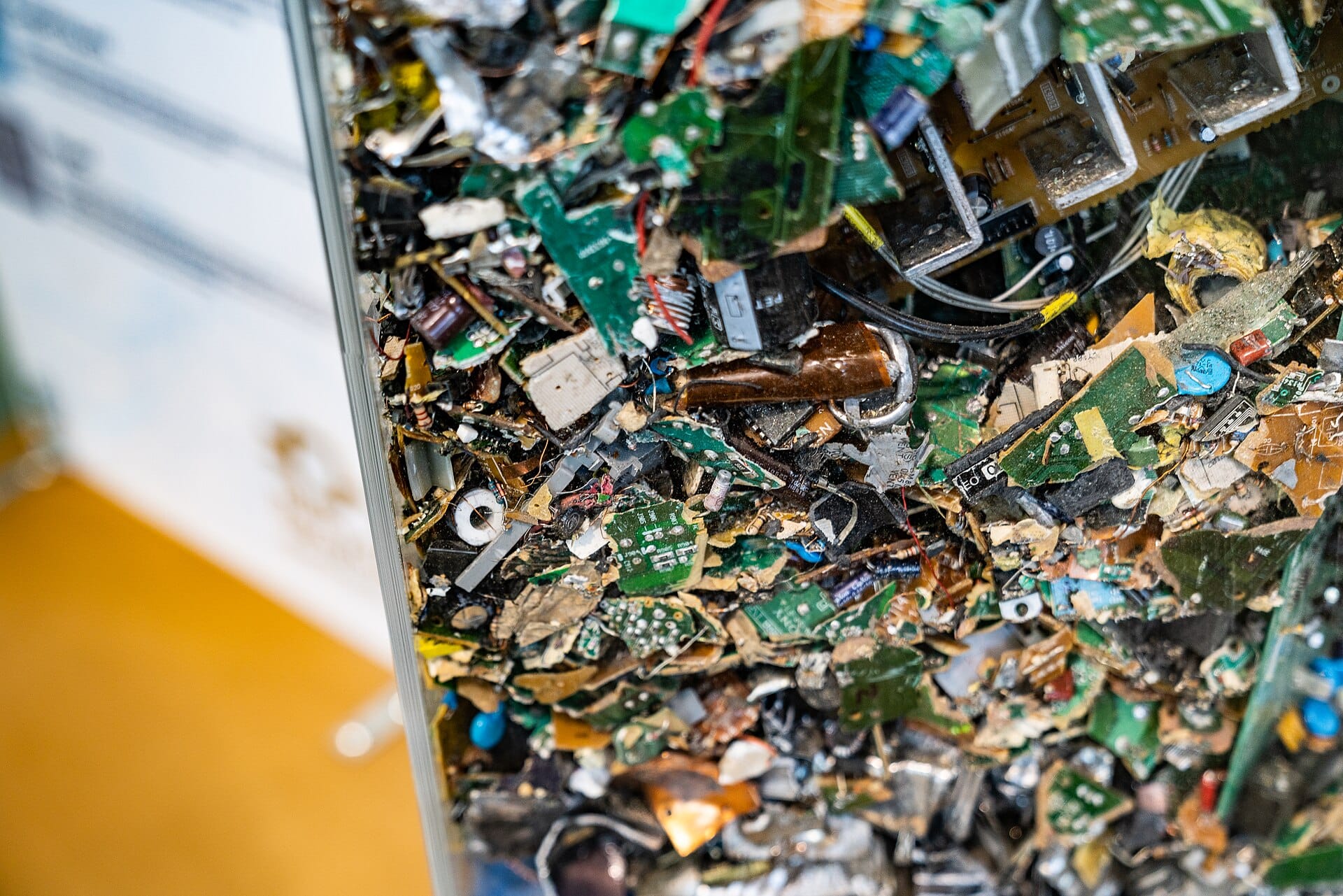
FR-4 combines glass-fibre reinforcement with thermoset epoxy resin. Its materials and processing carry embodied carbon, and its permanently bonded structure makes separation difficult at end of life. The only commercial route today is to shred and incinerate boards for the metals inside.
Meanwhile, demand from AI infrastructure, electrification and other high-performance electronics is putting pressure on PCB materials and capacity. For cost-sensitive, high-volume products, supply continuity and price matter more every year.
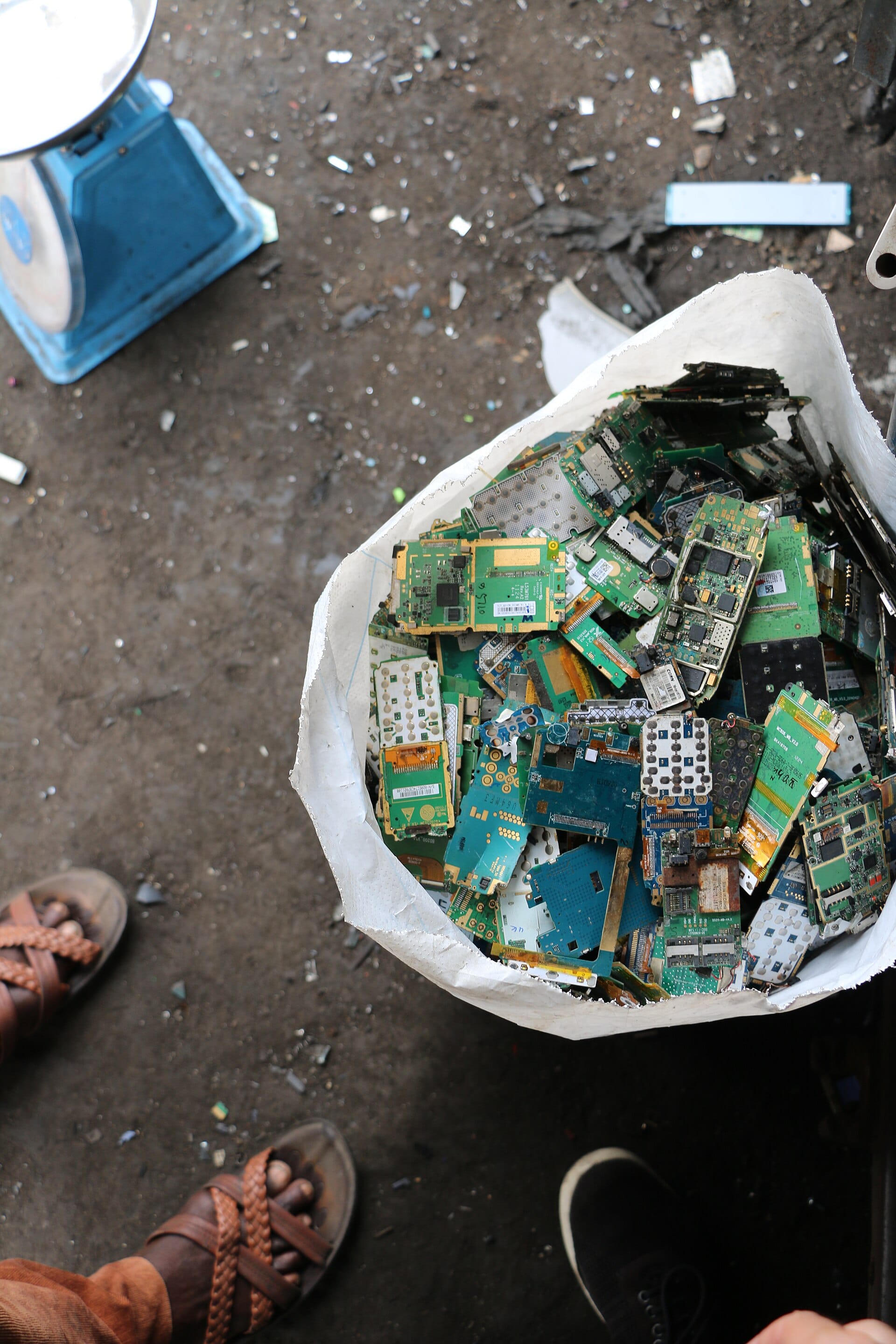
Electronics manufacturers face a combined challenge: cut Scope 3 emissions while protecting performance, availability and cost. Changing the material at the foundation of the PCB addresses all three without redesigning the supply chain around it.
Under the copper is plant fibre
A Soluboard® board is built like any two-layer PCB, with copper circuits etched on a core and sealed under solder mask. Where FR-4 makes that core from glass fibre and epoxy, Soluboard® uses natural fibre held in Solvanta™, Jiva’s thermoplastic.
- Solder mask and silkscreenProtects the circuit; openings over every pad
- Copper circuitEtched from the copper cladding, on both faces
- Soluboard® coreNatural fibre in Solvanta™, in place of glass and epoxy
- Solder mask, undersideOpenings only where holes and edge fingers pass through
From press to dissolve
-
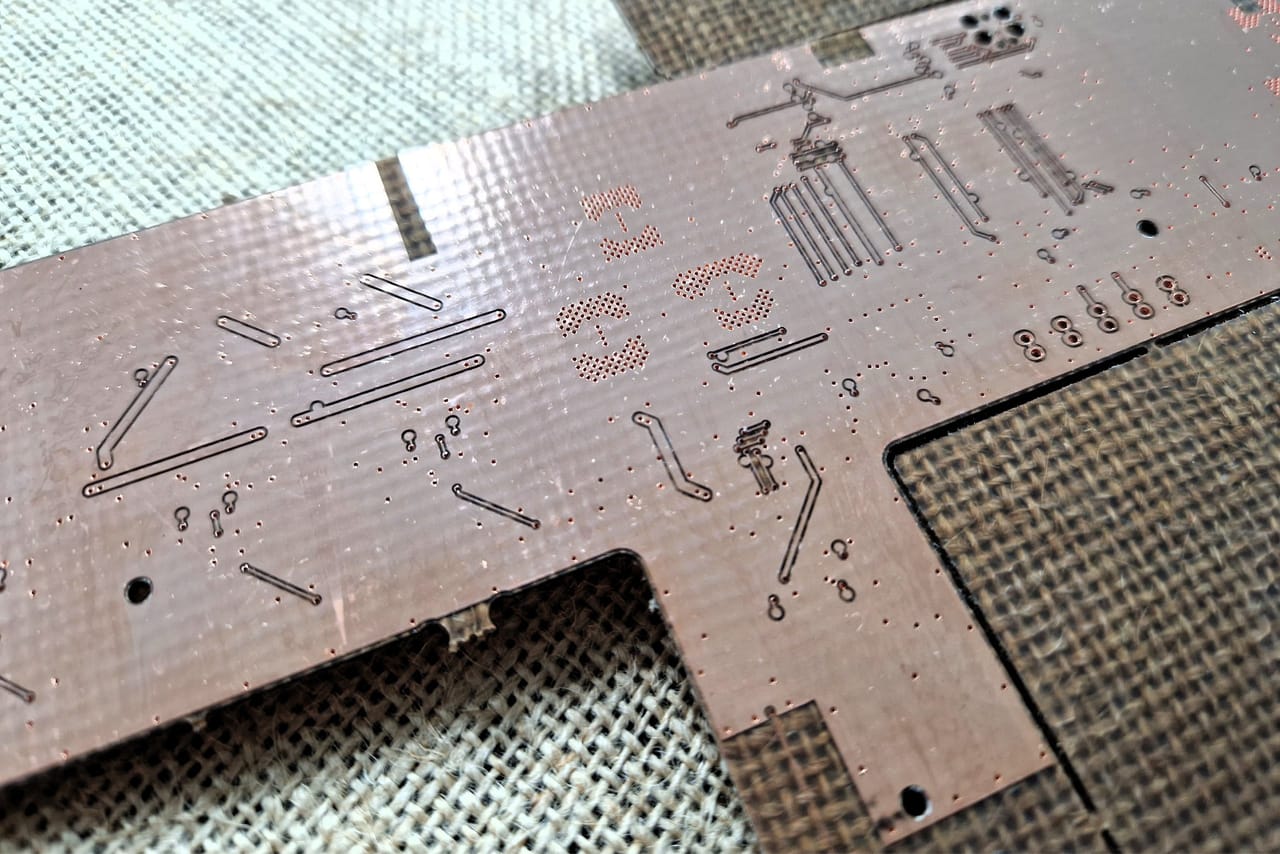
Press
Jiva laminates natural fibre and Solvanta™ thermoplastic with copper into panels on its UK production line.
Copper-clad laminate panels
-
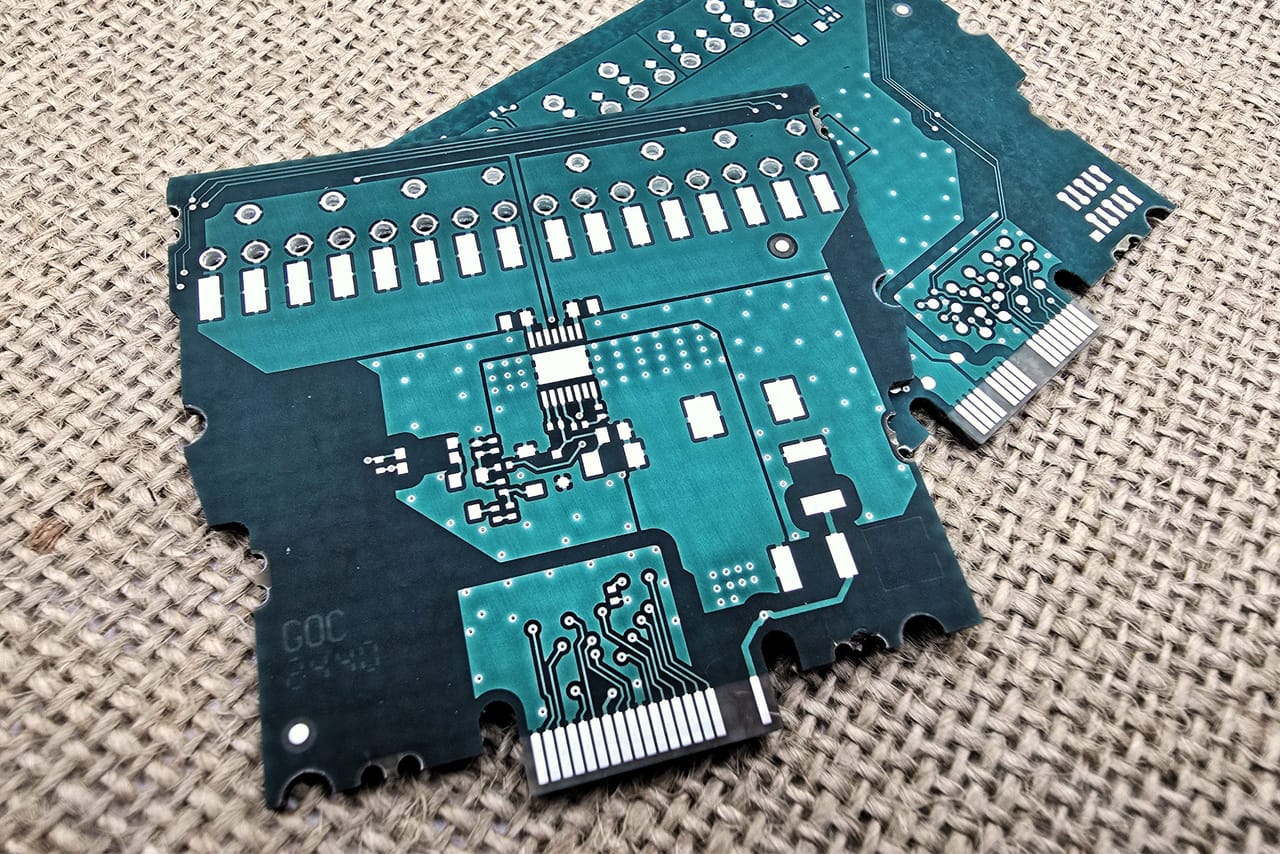
Etch
Approved PCB fabricators etch, drill, plate and route it on the equipment they already run.
Bare circuit boards
-
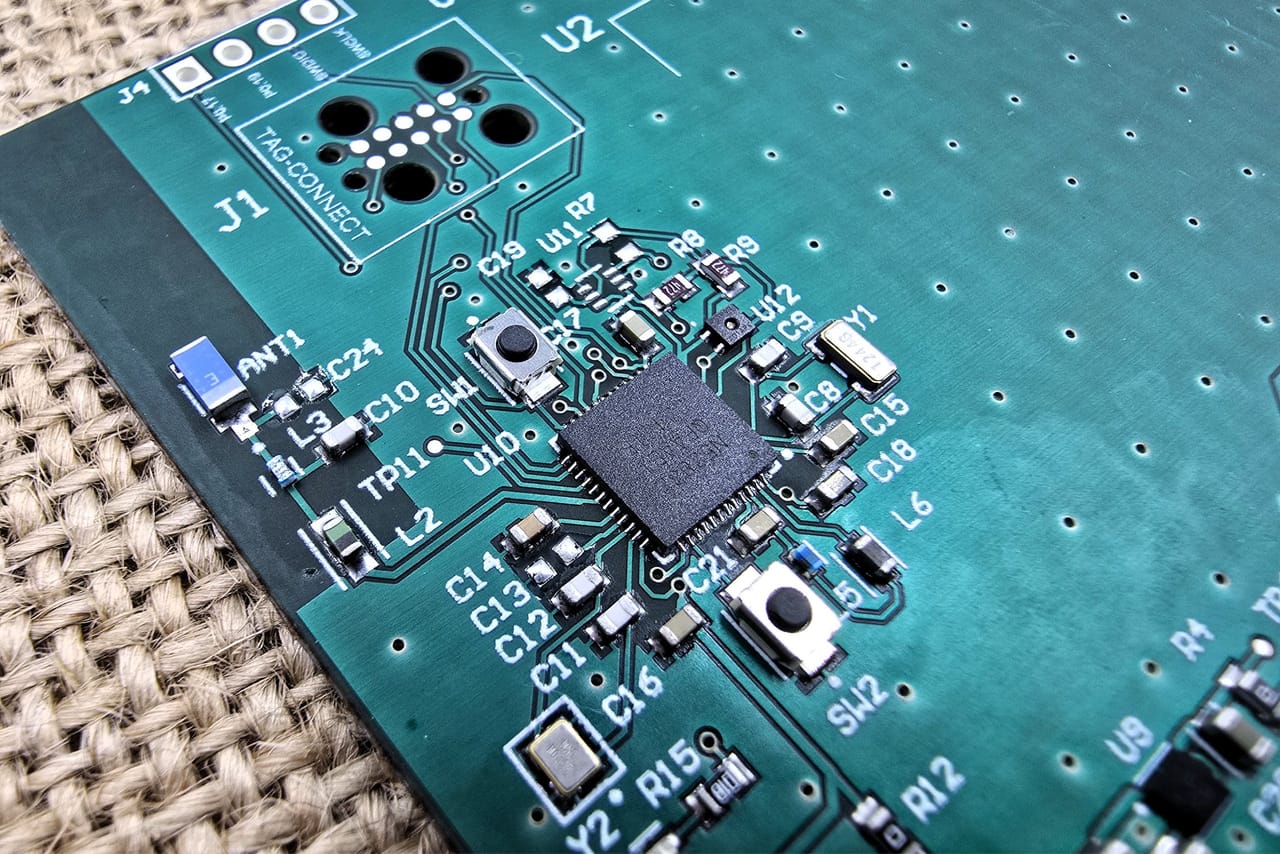
Build
Electronics assemblers solder the components at low temperature, with a peak reflow of 180 °C.
Finished, populated boards
-
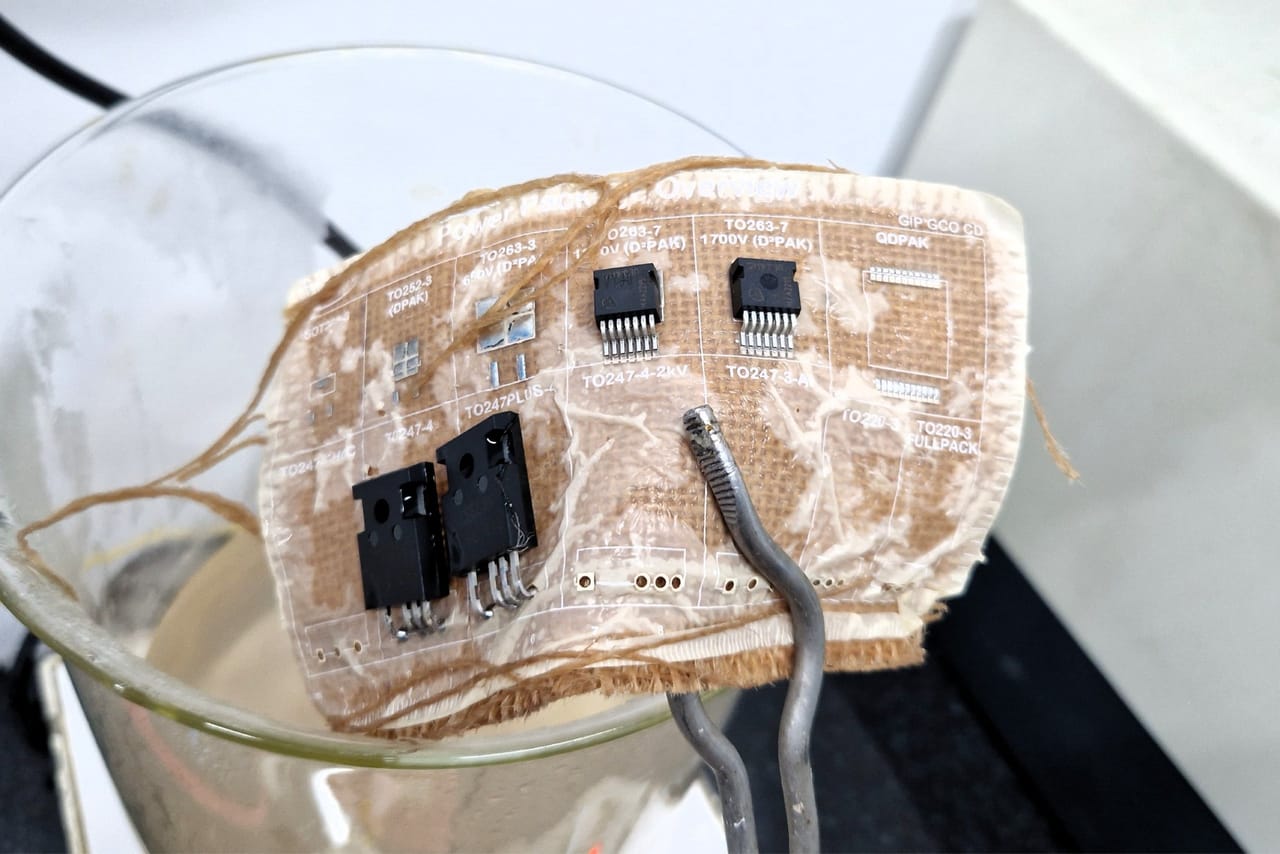
Dissolve
At end of life, recyclers use water at around 90 °C to separate binder from fibre and recover the copper and components.
Fibre, copper and components
Key figures
-
68%
lower CO₂ than FR-4
Cradle-to-gate laminate emissions of 13.18 kg CO₂e/m² against 41.69 for FR-4, in a comparative assessment with the University of Portsmouth.
-
37%
lighter than FR-4
Lower density than comparable glass-fibre laminate.
-
79%
lower processing emissions
For the modelled production stages, in the same assessment.
-
7
markets with granted patents
UK, US, India, Japan, South Korea, Singapore and Taiwan, from patent family WO2018/234801.
Latest news


Backed by Turquoise Capital, Low Carbon Innovation Fund 2, Katapult Climate, Armstrong Capital, Sorbon Ventures, Venrex, InnovationRCA.
The team
-

Stephen Driver FInstCT
Chief Executive Officer
-

Jack Herring
Chief Product Officer and co-founder
-

Paul Cook FCA
Chief Financial Officer
-

Alun Morgan
Chief Technology Officer
-

Alina Costrasel
Business Development Manager
-

Alan Green
Operations Manager
-

Nibedita Maji
Office Manager and Quality Assistant
-

Dr Murali Sethumadhavan
Non-Executive Director

Get in touch
Tell us about your board, your volumes or your fund. We reply to every enquiry.